


 موقع وجه أفريقيا موقع وجه أفريقيا هو موقع مهتم بمتابعة التطورات في القارة الأفريقية
Related Articles



IOM Warns of Protracted Displacement in Lebanon Due to War
Beirut (Lebanon) (AFP) – The head of the International Organization for Migration (IOM), Amy Pope, warned Thursday of prolonged displacement in Lebanon as the war between Israel and Hezbollah enters its second month, having forced more than a million people to flee and causing widespread destruction, with Israel threatening further devastation.
“I think those indicators are very worrying, given the level of destruction that is happening… and the additional destruction that has been threatened,” Pope told AFP in an interview, responding to a question about signs of prolonged displacement.
“There are areas in the south that are being completely razed to the ground… Even if the war ends tomorrow, this destruction will remain, and there will be a need for reconstruction,” she continued, noting the necessity of funding, resources, and calm for rebuilding.
“Unless we see those things happen, it means that people will remain displaced indefinitely,” she added.
The war in the Middle East spilled over into Lebanon on March 2nd after Hezbollah launched rockets at Israel in retaliation for the assassination of Iranian Supreme Leader Ali Khamenei on the first day of the US-Israeli offensive. Israel responded with large-scale airstrikes on Lebanon and ground incursions into southern Lebanon.
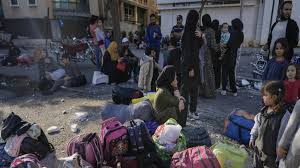
Lebanese authorities have registered more than one million displaced people, with over 136,000 of them residing in collective shelters.
Last week, Israeli Defense Minister Yisrael Katz stated that Israel intends to take control of the area south of the Litani River, approximately 30 kilometers from the border, warning that the hundreds of thousands of residents displaced from this area will not be allowed to return until the security of northern Israel is guaranteed. He also vowed that “all the houses in the border villages in Lebanon will be demolished, similar to the Rafah and Beit Hanoun model in Gaza.”
“More serious”
Bobb noted that the current displacement crisis is “far more serious” than the one the country experienced during the last confrontation between Hezbollah and Israel between 2013 and 2014, which ended with a ceasefire in November 2014.
Bobb said the number of displaced people this time is very high, pointing out that shelters are under pressure, and that some displaced people have not yet been able to return to their homes following the wave of displacement in the previous war.
She added that those outside Lebanon “have absolutely no idea of the scale” of the displacement crisis, which is occurring “amid an unprecedented shortage of humanitarian resources.”
The United Nations launched an urgent humanitarian appeal for more than $300 million to support Lebanon, including an appeal for the International Organization for Migration (IOM) for approximately $19 million. Bob said that “a very small fraction of this funding has arrived so far.”
“We see a dire need for the most basic life-saving support,” she said, including shelter and blankets.
The head of the UN agency reported that an Israeli airstrike this week on the Jnah area of Beirut damaged the organization’s compound, shattering windows and rendering its health center there “virtually unusable.”
The Lebanese Ministry of Health said the strike killed seven people, while Israel claimed to have killed a senior Hezbollah commander.
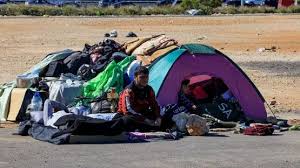
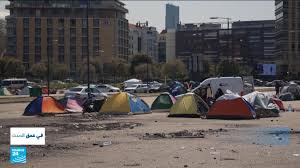
Since the war began a month ago, schools and playgrounds in and around Beirut have been converted into makeshift shelters, while some people are sleeping in the open or in tents in Beirut. Others are staying with relatives or friends or have found alternative accommodation, as rents have skyrocketed.
Since the start of its war with Hezbollah, Israel has bombed hotels in and around Beirut, as well as buildings in densely populated residential neighborhoods, sometimes far from Hezbollah strongholds, in areas where displaced people are believed to be sheltering.
Bob described the strikes as “shocking,” adding, “If people don’t find safety, they move. And if they don’t find it in their own country, they cross borders.”
