


 موقع وجه أفريقيا موقع وجه أفريقيا هو موقع مهتم بمتابعة التطورات في القارة الأفريقية
Related Articles


Report by – Reda Helal
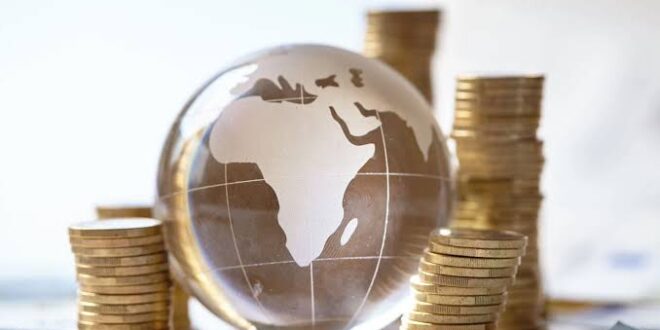
At a time when global attention is increasingly turning toward Africa as a land of opportunity, a critical concept is emerging to explain persistent investment hesitation: the “Perception Tax” — an invisible cost paid by companies that rely on assumptions rather than accurate market intelligence.
The term, introduced by João Gaspar Marques, Executive Director of Strategic Advisory at APO Group, describes the financial and strategic penalties organizations incur when they treat Africa as a single high-risk market, rather than a diverse continent of 54 distinct countries, each with its own economic, political, and regulatory realities.
The Cost of Ignorance
The perception tax does not appear on balance sheets, yet its impact is tangible. It manifests in higher costs of capital, delayed investment decisions, and missed first-mover advantages. Investors who rely on generalized narratives often overestimate risk and demand unjustified premiums, ultimately losing opportunities to more informed competitors.
Data suggests that these perceptions are often misleading. A study commissioned by the African Development Bank and conducted by Moody’s Analytics found that Africa recorded a loss rate of just 1.7% in infrastructure investments — the lowest globally, compared to 13% in Latin America and 10% in Eastern Europe.
Despite this, the cost of capital across African markets remains three to four times higher than in comparable regions, highlighting a clear disconnect between perception and reality.
Opportunity Favors the Informed
The report underscores that investors equipped with reliable, on-the-ground intelligence are better positioned to capitalize on opportunities. By understanding local dynamics, they are able to enter markets earlier, negotiate better terms, and achieve stronger returns.
Helios Investment Partners stands as a compelling example, having built a portfolio exceeding $3 billion by entering markets others dismissed as too risky. Similarly, Kenya’s regulatory reforms, which propelled the country 52 places up the World Bank’s Ease of Doing Business Index, have attracted sustained foreign investment — not because risk disappeared, but because it became better understood.
Africa Is Not One Market
One of the most persistent misconceptions, the report argues, is treating Africa as a homogeneous entity. In reality, the differences between African countries can be as significant as those between major global economies. Just as France differs from Finland or the United States from Mexico, so too do Benin and Botswana differ in their investment landscapes.
A Self-Reinforcing Cycle
The perception tax is not just a cost — it is a cycle. Delayed investment slows development, reinforcing negative perceptions and further discouraging capital inflows. Breaking this cycle requires informed investment driven by data, not outdated narratives.
In this context, the African Continental Free Trade Area represents a $3.4 trillion market with a population approaching 1.5 billion people, alongside vast reserves of critical minerals essential for the global energy transition.
Knowledge as a Competitive Edge
The report concludes that the most successful companies in Africa treat market intelligence as a core investment. They distinguish between real structural risks and perceived noise, recognizing that the gap between perception and reality is temporary — and profitable for those who close it first.
Conclusion:
The perception tax is not inevitable. It is avoidable. And for those equipped with insight and understanding, it can be transformed from a cost into a competitive advantage — in a continent that continues to offer exceptional opportunities to those willing to see beyond the headlines.
